How to Build a Study Plan You’ll Actually Stick To
Build a realistic study plan around your deadlines, available time, energy, and learning goals—without scheduling every minute of the week.
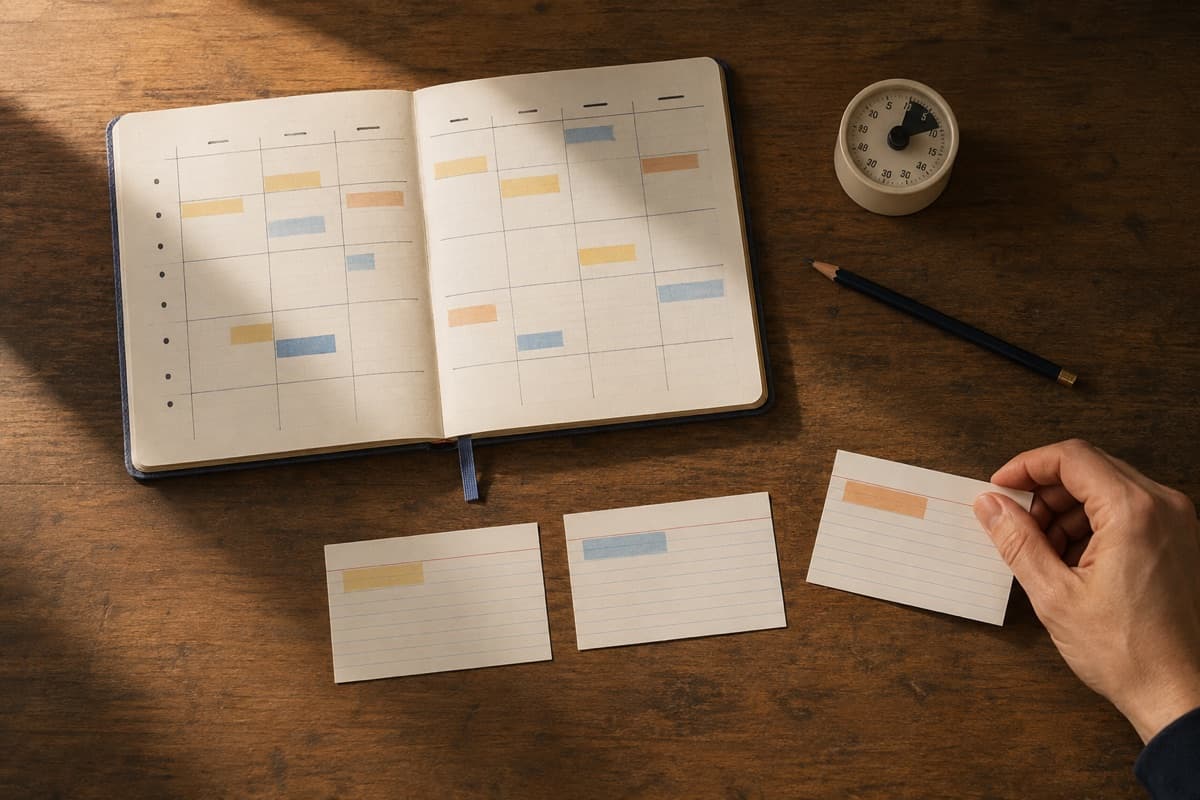
A study plan should make schoolwork feel manageable. If building the schedule turns into a massive project of its own, it’s already too complicated.
The most effective plans aren't packed from sunrise to bedtime. They clearly show what needs attention, when you'll work on it, and where you have room to adjust when life gets in the way. Here is a practical way to set up a plan that survives real life.
Start with a clear finish line
“Study chemistry” is too vague to be useful. “Complete 20 practice questions and review every mistake” gives you a clear stopping point.
For every subject, define the exact result you need to produce: a finished chapter, a draft essay, 15 flashcards, or a timed practice test. Specific outcomes eliminate friction when starting and make it obvious when you're finished.
Map out fixed commitments first
Before scheduling a single study session, block off your non-negotiables: classes, work shifts, meals, commute time, family duties, and sleep. This stops you from designing a perfect plan for a week you don't actually have.
Once those are set, look for realistic windows of time. A dependable 40-minute focused session beats a vague three-hour block you keep pushing off all afternoon.
Plan backward from deadlines, not forward from today
Put every exam and major deadline on one central calendar, then break larger projects into smaller checkpoints.
For an essay due on Friday, a backward timeline might look like this:
- Monday: Choose the argument and gather sources
- Tuesday: Draft the outline
- Wednesday: Write the rough draft
- Thursday: Revise and proofread
- Friday: Final check and submit
Working backward builds in natural buffers for questions, mistakes, or low-energy days.
Work with your energy, not against it
Schedule high-focus tasks for the hours when you're naturally most alert. Reserve lighter chores—like organizing notes, gathering references, or reviewing vocabulary cards—for when your brain is tired.
You don't need to force an early-morning routine just because productivity guides recommend it. Notice when you think clearly, and protect a slice of that peak time for your hardest subject.
Define what "studying" actually looks like
Rereading highlighted notes feels productive, but it rarely builds long-term memory. Instead, focus on active techniques that force your brain to engage:
- Answer practice questions without checking your notes.
- Explain complex concepts out loud in simple language.
- Work through a math or logic problem from scratch.
- Write down mistakes from past quizzes and detail why they happened.
If a task doesn't force your brain to retrieve or apply information, it's probably passive filler.
Leave room for unexpected delays
Avoid filling every available hour on your calendar. Leave one or two unassigned blocks each week for tasks that take longer than expected. If you're fully caught up, use that time for quick reviews—or just take a break.
This built-in buffer keeps one chaotic Tuesday from derailing your entire week.
Run a 10-minute weekly reset
At the end of every week, take ten minutes to reflect on four quick questions:
- What did I actually finish?
- What needs to roll over into next week?
- Which subject demands more focus right now?
- Which study method yielded the best results?
Treat your schedule as a living system, not a contract you've broken. A good plan adapts to reality.
How to recover when you fall behind
When you miss a few sessions, avoid the temptation to cram every skipped task into tomorrow's schedule. Instead, triage: identify what is urgent, what still matters, and what can be trimmed or dropped completely. If a deadline is genuinely at risk, reach out to your instructor early rather than going silent.
Pick one small, concrete task and complete it. Momentum builds through action, not by drafting a stricter timetable.
The goal isn't control—it's clarity
An effective study plan is simple enough to check daily and flexible enough to weather an imperfect week. Define clear outcomes, work backward from deadlines, protect your personal life, and adjust as you go.
You don't need to control every hour of your day. You just need to make the next right step easy to see.
Share