How to Improve Employee Productivity Without Creating Pressure
Constant pressure doesn't produce better work — it just produces visible motion. Here's what actually improves output without burning people out.

When productivity slips, the fastest response is usually more monitoring, more meetings, and more urgency.
It rarely works. What it produces is a short burst of visible activity — people looking busy, replying fast, staying late — while the actual work gets harder to do. Thoughtful work needs room, and pressure eats that room first.
Sustainable productivity comes from clearer priorities, fewer interruptions, better systems, and enough capacity to do the job without cutting corners. Pressure can't fix a process that creates confusion all day.
Make priorities unmistakable
People need to know which result matters most, what "done" actually looks like, and which deadline is real.
If everything is urgent, employees either switch tasks constantly or guess what leadership cares about. Both are exhausting, and neither produces good work.
Cap the number of active priorities. When something new becomes urgent, decide what gets dropped or delayed. Quietly stacking it on top of everything else isn't prioritization — it's just denial with extra steps.
Explain the outcome, not every movement
Give people context: who the work serves, why it matters, what constraints can't be broken. Then let them figure out how to get there.
Autonomy doesn't mean walking away. Agree on checkpoints, decision boundaries, and when something should be escalated. The goal is judgment, not abandonment.
Reduce work in progress
Starting ten tasks feels productive. Finishing two actually is productive.
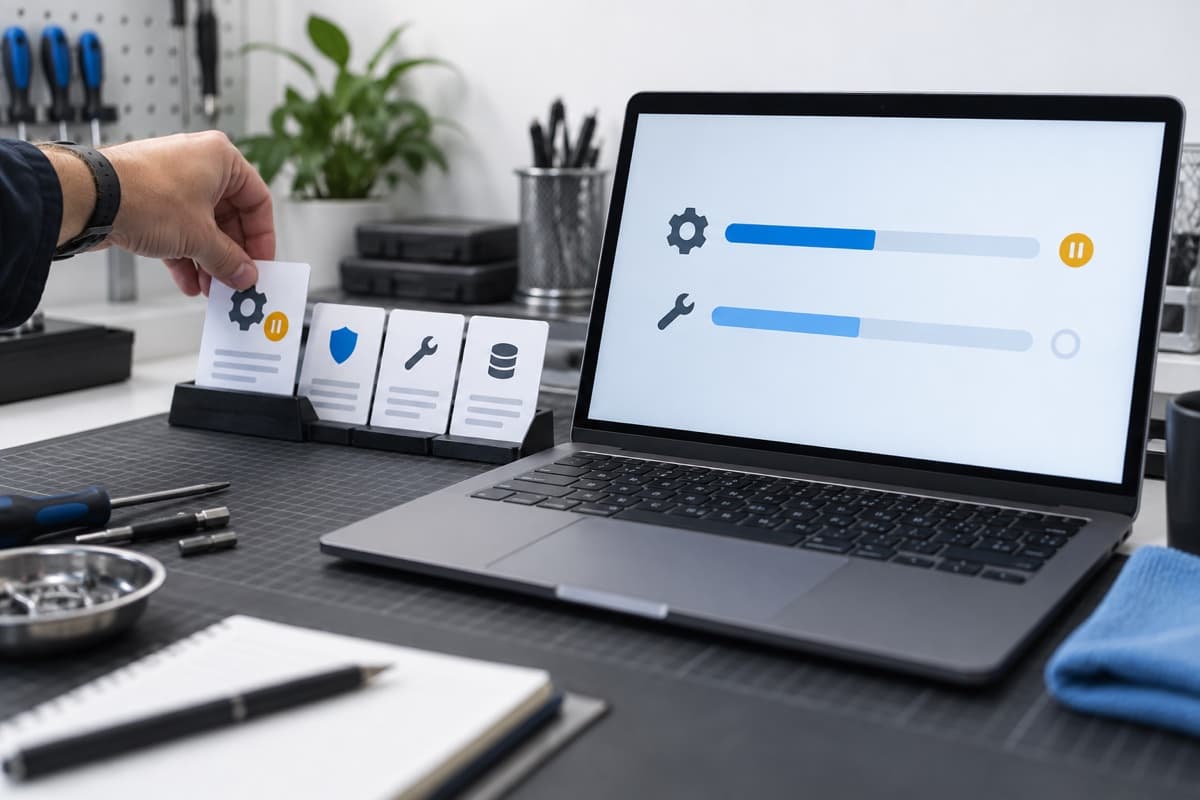
Encourage teams to close or consciously pause existing work before opening another stream. A simple shared board — planned, active, blocked, done — is usually enough. The point is coordination, not surveillance, and the difference matters more than most managers realize.
Protect time for focus
Batch meetings into predictable windows. Use written updates for anything that doesn't need discussion. Publish an agenda. End the meeting once the decision is made, not when the clock runs out.
Respect response-time expectations. If every message demands an instant reply, you haven't hired specialists — you've hired a switchboard.
Remove repeated friction
Ask employees what wastes time every week. The answers are usually mundane: duplicate data entry, approvals stuck in someone's inbox, an access request that takes four days, equipment that fails on schedule.
Fixing one recurring obstacle often improves output more than any new performance initiative. It's also cheaper.
Match workload to capacity
A team running at 100% has no room for a sick day, a training session, or an urgent request. Something has to give — and it's usually quality or people.
Plan some margin. When overtime becomes the norm instead of the exception, the problem isn't effort. It's the system.
CDC guidance on worker mental health is clear that managers and workplace policies shape job-related stress. Well-being can't be downloaded onto individual employees as a personal responsibility.
Give feedback while it's still useful
Feedback works best when it's specific, timely, and tied to the work itself. Say what happened, why it mattered, what to repeat or change.
Recognition should be just as specific. "Your handover notes meant the support team didn't have to call you after hours" teaches far more than "Great job." The first one tells people what good looks like. The second is just noise.
Measure results carefully
Pick measures that reflect value and quality — not visible activity.
Message counts, keyboard time, and hours online reward the appearance of work while quietly punishing efficiency. Someone who finishes early and logs off gets flagged. Someone who stretches the same task across eight hours gets praised. That's how you train a team to slow down.
Combine numbers with context. Faster output isn't better if errors, rework, complaints, or turnover climb alongside it.
Make breaks normal
Nobody should have to perform exhaustion to prove they care.
Encourage real meal breaks, movement, leave, and a clear end to the workday where the role allows it. Managers set the tone here more than any policy. Sending non-urgent messages at 11 p.m. and expecting replies tells the team that rest is optional. It isn't.
Test changes with the team
Pick one problem. Agree on a small change. Run it for two to four weeks.
Decide in advance what improvement would look like, then review the results with the people doing the work — not just the people managing it.
Keep it, adjust it, or drop it. Not every change works, but every change teaches you something if you actually look at the outcome.
Pressure isn't a strategy
Productivity improves when people can see the goal, concentrate long enough to make real progress, and raise problems without worrying about the consequences.
Start by clarifying priorities and removing one recurring source of friction. That alone will beat most performance campaigns.
A healthy workplace doesn't abandon accountability. It just stops pretending that constant pressure is the same thing as good management.
Share