Online vs. Traditional Learning: Which One Actually Works for You?
Choosing between online and traditional learning isn’t about which format is "better"—it's about which one fits your life. Compare flexibility, interaction, real costs, and hands-on requirements to find the environment you’ll actually finish.
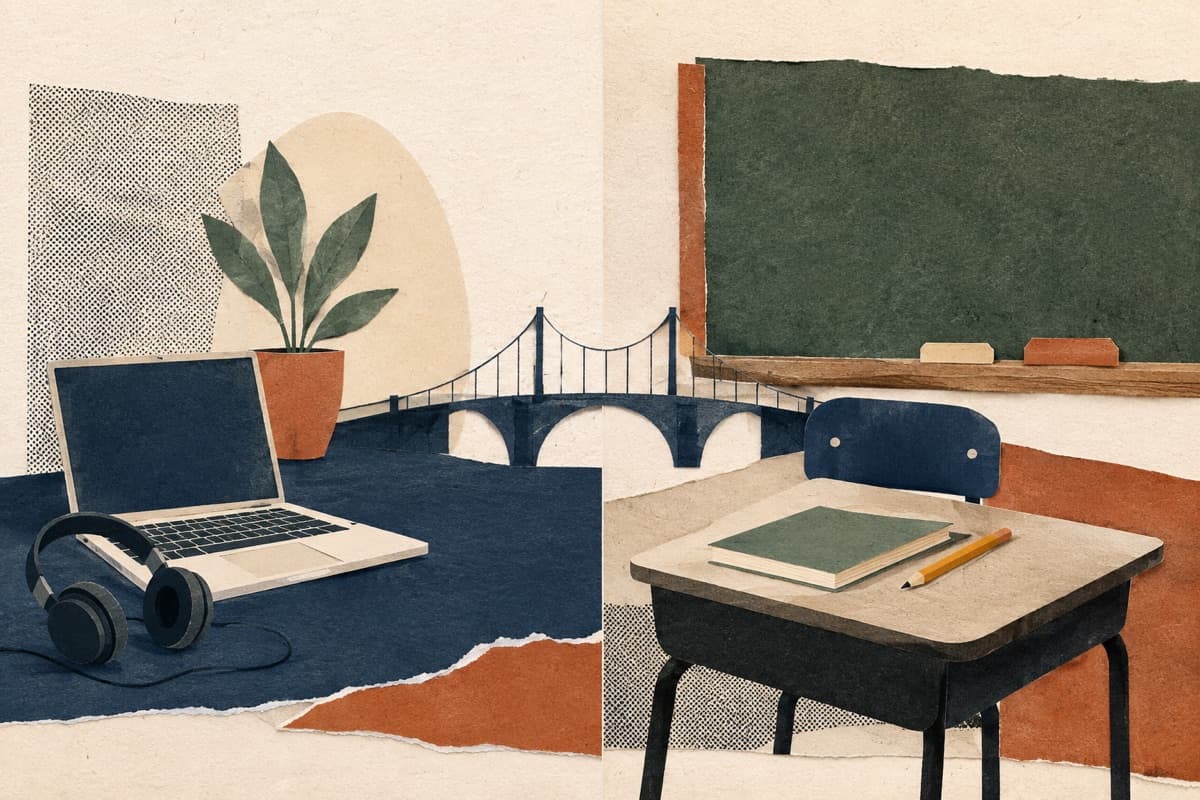
Let’s get one thing straight: there’s no "right" answer here. Anyone who tells you online learning is always better—or that traditional classrooms are obsolete—has probably only experienced one side of the equation.
I’ve done both. And honestly? The better choice depends entirely on you: your schedule, your subject, and—most importantly—how your brain actually retains information.
For a full-time worker with two kids, a self-paced online course can be a lifeline. For someone who needs daily accountability to stay on track, that same course might feel like a lonely, overwhelming slog. Meanwhile, a traditional classroom gives you structure, but those rigid attendance rules? They can be brutal if life throws you a curveball.
So let’s cut through the hype and talk about what really matters.
1. Schedule freedom vs. the hidden "structure tax"
Online courses hand you the keys to your schedule. Watch lectures at 2 AM if that’s your thing. Fit studying around your job, your kids, your life. But here’s the catch nobody talks about: freedom comes with a hidden tax. You’re now responsible for creating your own structure. No one’s standing over you reminding you about deadlines.
Classrooms, on the other hand, force you into a rhythm. You show up, you sit down, you learn. That fixed schedule reduces decision fatigue. But if your car breaks down or your kid gets sick? Too bad—you're marked absent.
2. Interaction: In-person rapport vs. digital forums
There’s something irreplaceable about raising your hand in a lecture hall, catching a professor’s eye, and getting an immediate answer. You pick up on body language, hear spontaneous tangents, and build rapport naturally. Group projects feel less forced when you're in the same room.
Online? It can work—but it depends entirely on how the course is designed. If there are live sessions, active discussion boards, and responsive instructors, the experience feels alive. If it’s just pre-recorded videos and a dead forum? You’re basically paying for a YouTube playlist.
Pro tip: Before you enroll in any online program, ask the admissions team one question: "How often do instructors actually interact with students?" If they hesitate, run.
3. Where you study matters
Let’s be real: studying from home sounds dreamy until you realize your couch is right there. You need a reliable computer, fast internet, and a quiet corner. Not everyone has that.
Campuses offer dedicated spaces—libraries, labs, study lounges—that are built for focus. But you’re also paying for parking, commuting time, and overpriced coffee. It’s a trade-off.
4. What are you actually learning?
Some subjects are made for screens. Writing, coding, marketing, history lectures—these translate beautifully online when the materials are solid.
Others? Not so much. If you're learning to draw blood, operate machinery, or perform clinical procedures, you need hands-on practice. For those fields, hybrid programs—theory online, labs in person—are often the sweet spot.
5. How independent are you really?
Online learning is a filter. It rewards people who can recognize when they’re stuck, seek help proactively, and start assignments without a teacher pushing them.
Classrooms offer more visible guardrails—but they still require you to put in the work after hours. Neither format lets you coast. They just organize the effort differently.
6. The real cost (not just tuition)
When comparing prices, look past the sticker. Factor in commuting, housing, campus fees, software, materials, and—most importantly—time lost from work.
Online isn’t automatically cheaper. And a traditional degree isn’t necessarily overpriced once you account for campus facilities, career services, and the network you build.
7. Will anyone respect your credential?
Here’s the blunt truth: not all online degrees are created equal. Always check accreditation, instructor backgrounds, curriculum quality, and employer reputation in your field. Read reviews. Ask alumni.
Delivery format says very little about teaching quality. A well-designed online course will embarrass a lazy classroom lecture every single time.
Quick Decision Guide
Still stuck? Ask yourself:
- Do I need a rigid schedule to stay motivated—or do I prefer flexibility?
- Does my subject require labs, equipment, or in-person evaluation?
- How quickly do I need answers when I hit a wall?
- Do I have a quiet, distraction-free space at home?
- Have I ever successfully finished a self-paced online course before?
The best format is the one you’ll actually finish
Online learning wins when flexibility and location independence are your top priorities. Traditional classrooms shine when you need routine, immediate feedback, and hands-on resources.
Pick the environment that makes consistent progress most likely for you right now—not the one that sounds most modern, or the one your parents expect.
At the end of the day, the best format is simply the one you stick with.
Share